
June was the second-warmest June ever recorded
June 2026 was the second-warmest June globally and the warmest on record for Western Europe. Global ocean surface temperatures were also the highest recorded for June.
FAQCO2 Monthly
July 2026 Edition
This month: the NoCO2 Net Zero Standard launches, the Climate Disclosure WatchDog delivers its first diagnosis, and we break the Scope 3 standoff wide open.
9 min read · Published 1 July 2026
Section 01
June 2026 was the second-warmest June globally and the warmest on record for Western Europe. Global ocean surface temperatures were also the highest recorded for June.
An estimated 2,700 premature deaths in England and Wales were linked to the May and June heatwaves. Researchers estimated that more than 40% of these deaths would not have occurred without human-caused global warming.
Scientists drilled more than 1,000 metres through Antarctica’s Thwaites Glacier and found turbulent, relatively warm ocean water melting the glacier from beneath. Thwaites is already a major contributor to sea-level rise, and its retreat could destabilise a much larger portion of the West Antarctic Ice Sheet.
Australia’s average temperature was 1.50°C above the 1961–1990 average. It was the fifth-warmest June recorded since national observations began in 1910 and the warmest since 1996.
The World Meteorological Organization reported an 80% likelihood of El Niño during June to August and a 90% or greater likelihood that it will continue until at least November. A moderate or strong El Niño could further increase global temperatures and the risks of heatwaves, drought and extreme rainfall.
Section 02
In June, the Carbon Reduction Institute published the first version of the open-source NoCO2 Net Zero Standard.
The Standard provides a comprehensive and prescriptive framework for making a credible net zero claim. The publication consists of five connected documents:
Together, these documents provide rules for calculating what an organisation emits, determining what it should reduce, assessing how those reductions can be achieved and governing what may ultimately be claimed.
The complete framework is available for download.
Download the Net Zero Standard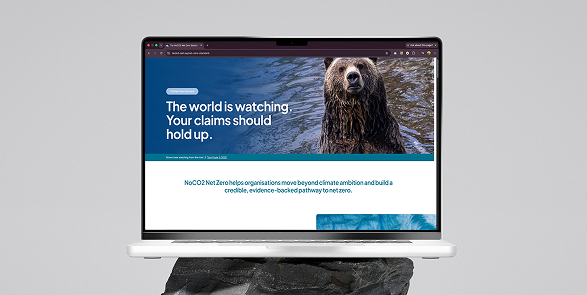
CRI has also launched a new website to make our standards, methods, reports and climate services easier to access.
Visit the CRI websiteCRI is developing an AI-supported diagnosis tool that applies consistent rules to climate disclosures and tests whether the information provided to stakeholders is complete, transparent and decision-useful.
Section 03
Australia's second group of reporting entities became subject to mandatory climate-related financial reporting for financial years beginning on or after 1 July 2026. These organisations must now report their material climate risks and opportunities, governance, strategy, targets and Scope 1, 2 and 3 emissions under AASB S2.
Read the ASIC reporting requirementsBy 6 May 2026, 259 mandatory sustainability reports had been lodged with ASIC. ASIC found that reporting was becoming more consistent but identified problems including inappropriate disclaimers, unclear assumptions and reports that failed to connect previously experienced extreme weather impacts with future climate risks. The rules may be improving consistency, but the real test is whether the information is complete, transparent and useful enough to support decisions.
Read ASIC's early observationsThe Science Based Targets initiative released Version 2.0 of its Corporate Net-Zero Standard in June. The update places greater emphasis on implementation, transition planning and reporting progress. However, it also makes a long-term net zero target optional, introduces "best efforts" targets and provides multiple flexible approaches to Scope 3 emissions. This flexibility risks producing targets that are difficult for stakeholders to compare—and allows organisations to obtain validation without committing to reach net zero.
A net zero standard that does not require a net zero target leaves an important question unanswered: what exactly is being validated?
ISO released its Draft International Standard for Net Zero Aligned Organizations—ISO 14060—on 17 June 2026.
The draft includes some positive elements, including separate Scope 1, 2 and 3 targets, restrictions on using carbon credits towards emissions-reduction targets, and durable removals for residual emissions. However, our initial review has identified some significant concerns.
The draft allows organisations to exclude Scope 3 emissions from their inventory and interim targets when they are not considered "significant". Its significance test combines the magnitude of the emissions with the organisation's ability to influence them. This is uncomfortably similar to the Climate Active relevance test. It could allow large emissions to escape interim targets because the organisation claims it has limited influence over them. Disclosure of an exclusion does not make an incomplete inventory complete.
A deficient boundary also removes the decision-usefulness of supply-chain emissions information. Customers cannot accurately calculate their own emissions if their suppliers are permitted to leave material parts of their value chains outside the inventory.
The draft also allows claims to be validated or verified internally. An organisation may retain a "net zero aligned progress" claim after missing a Scope 2 or Scope 3 interim target by as much as 25%, while the phase-out of fossil-fuel products and services is treated only as an example of "higher ambition". This does not appear to be a particularly ambitious standard for organisations seeking to demonstrate climate leadership.
If ISO 14060 is intended to establish a minimum framework for managing a transition, that should be made clear. If it is intended to govern net zero leadership claims, it risks watering down the meaning of net zero until ordinary transition planning is presented as climate leadership.
Section 04
Climate disclosure is becoming mandatory, but compliance alone does not guarantee that a disclosure is complete, transparent or decision-useful.
The Climate Disclosure WatchDog applies a consistent set of rules to corporate climate disclosures. It tests the information provided, identifies significant omissions and examines whether targets and headline claims are supported by the underlying emissions data.
The purpose is not to tell stakeholders what to think. It is to put the evidence and reasoning on display so they can decide for themselves whether the disclosure is useful.
Our first diagnosis
CRI published its first formal Decision-Useful Diagnosis in June, examining Telstra's climate disclosure.
Telstra received a positive overall assessment and was one of the strongest disclosures examined during the development of the rules. It was a welcome result after recurring problems were identified across many of the other disclosures reviewed.
The diagnosis still identified matters requiring attention, including Telstra's treatment of renewable energy "enabled" by its products and services. Enabling renewable energy generation is not the same as consuming renewable electricity or demonstrating an attributable reduction in Telstra's own emissions.
The report explains the findings, the rules applied and the evidence supporting the assessment. CRI also issued an open letter inviting Telstra to respond, correct any factual errors and consider the recommendations.
Before looking at an organisation's targets, find out which emissions have been included in its inventory.
Look for:
A reduction target can be mathematically accurate while still giving stakeholders a deficient picture if it is applied to an incomplete or selectively defined inventory.
One formal diagnosis was published, accompanied by an open letter and an invitation for the reviewed organisation to respond. We are working on a way to display these complex reports in a more reader friendly way, allowing stakeholders to identify exactly what the climate disclosure means for them.
This is the beginning of a growing public library of climate disclosure reviews. The WatchDog will allow stakeholders to examine the findings, follow company responses and decide whether the information being provided is genuinely decision-useful.
Look out for Climate Disclosure Diagnoses covering Australia's four major banks, some of Australia's largest mining companies and many more organisations. These reviews are expected to be published towards the end of July.
Section 05
Organisations are asking their suppliers for emissions data. Those suppliers are then asking their own suppliers for emissions data—and everyone is waiting for someone further down the supply chain to calculate it first.
In some cases, the suppliers are also customers. The same organisation may be requesting emissions data in one direction while being asked to provide its own emissions data in the other.
This creates the Scope 3 standoff, or Scope 3 loop:
We cannot calculate our supply-chain emissions until our suppliers calculate theirs. Our suppliers cannot calculate theirs until their suppliers provide the data.
The result is often incomplete inventories, indefinite delays or the exclusion of emissions because supplier-specific information is unavailable.
The question
Can an organisation exclude Scope 3 emissions because its suppliers have not provided the necessary data?
THE ANSWER: NO.
A lack of supplier-specific data affects the quality of an estimate, but it does not make the emissions disappear. Organisations can use spend-based estimates, industry averages and other secondary data to calculate a complete initial inventory. These estimates can then be progressively replaced with better supplier-specific information as it becomes available.
It is also a bit rich for an organisation to delay calculating its own emissions while waiting for better information from suppliers if it is not producing and publishing equivalent emissions information for its own customers.
Every organisation is part of someone else's supply chain. Solving the problem therefore requires organisations to provide better data as well as request it.
The NoCO2 Supplier Specific Emissions Factor Methodology provides a consistent way for suppliers to calculate and communicate the emissions associated with the goods and services they sell.
Under the method, the supplier:
Providing only a supplier's Scope 1 and Scope 2 emissions is not enough. Those emissions may represent only a small part of the footprint associated with the product or service being purchased.
The supplier-specific emissions factor must also include the supplier's relevant upstream Scope 3 emissions. This allows complete emissions information to move progressively through the supply chain.
Organisations do not need to wait for perfect data before calculating their emissions.
Estimate first. Improve the data over time. Engage suppliers using a consistent method. Replace secondary estimates with complete supplier-specific factors as they become available.
Most importantly, provide your customers with the same quality of emissions information you expect to receive from your suppliers.
That is how the Scope 3 loop is broken.
Download the open-source Supplier Specific Emissions Factor MethodologySection 07
CRI's methods, standards and findings are published so they can be examined, questioned and improved.
CRI's first public diagnosis assesses whether Telstra's climate disclosure is complete, transparent and decision-useful.
Read the Diagnosis · Open Letter →
The complete open-source NoCO2 framework—including the Standard, Supplier Specific Emissions Factor Methodology, Clean Alternative Assessment Methodology, Required Interventions Schedule and Prohibited Activities Schedule—is available free of charge.
Download the complete NoCO2 framework →
Search hundreds of technical questions covering financial reconciliation, inventories, supplier emissions, reduction pathways, clean alternatives, carbon removals, claims, assurance and other aspects of the NoCO2 Net Zero Standard.
Explore the FAQCO2 Technical Library →
Learn how suppliers can provide customers with complete, calculated emissions factors for the goods and services they supply.
Explore Supplier-Specific Emissions Factors →
CRI's guidance explains how stronger emissions data, transition planning and supporting evidence can improve reporting under AASB S2.
Mandatory Climate Reporting →
Section 08
This Month
The public Climate Disclosure WatchDog will be launched later this month.
It will bring CRI's Decision-Useful Diagnosis reports together in one place, allowing stakeholders to examine the findings, compare company disclosures and decide whether the information provided is complete, transparent and genuinely useful.
The initial release will include diagnoses covering Australia's four major banks, some of Australia's largest mining companies and a growing range of other organisations.
Next Month
CRI will release an initial framework to help organisations transition from existing carbon-neutral claims to credible NoCO2 Net Zero commitments.
The pathway will recognise the work organisations have already undertaken while introducing stronger requirements for complete inventories, genuine reductions, clean technology, supplier engagement, carbon removals and transparent disclosure.
It will provide a practical, dated transition rather than allowing offset-led carbon-neutral claims to continue indefinitely.
CRI is also developing a methodology and guidance for measuring and minimising the greenhouse gas emissions associated with artificial intelligence.
The guidance will consider how organisations identify and calculate emissions arising from AI use, improve the quality of the underlying data and make informed choices that reduce unnecessary energy consumption and emissions.
The objective is to help organisations capture the benefits of AI without ignoring or unnecessarily increasing its climate impact.
Ongoing
The first publication of the NoCO2 Net Zero Standard begins the public review process—it does not end it.
CRI will continue testing the Standard, publishing clarifications and inviting feedback from organisations, consultants, assurance providers and other interested stakeholders.
The evidence gained from applying the Standard will be used to strengthen its rules, methods and supporting guidance ahead of future publications.
FAQCO2 Monthly is intended to do more than repeat the climate news. Each month, we will examine the claims being made, explain the rules that matter and share practical solutions organisations can apply.
Have a climate claim, disclosure or carbon accounting question you would like us to examine? Send it to CRI for a future edition.
You can also nominate an organisation for a Climate Disclosure Diagnosis or register to participate in the ongoing review of the NoCO2 Net Zero Standard.
Our methods are on full display. We invite you to examine them, question them and help us strengthen them.